If you’re planning a reroof in Los Angeles, you’ve probably narrowed it down to two contenders: asphalt shingles and composite shingles. Both are popular, both hold up well in Southern California’s climate, and both come in a wide range of styles — but they’re not interchangeable. The right choice depends on your budget, how long you plan to stay in your home, your neighborhood’s fire risk, and even your HOA’s rules.
At The Best West Roofing, we’ve installed both materials across Encino, Sherman Oaks, Pasadena, and the rest of the San Fernando Valley for over a decade. Here’s the honest, side-by-side breakdown homeowners actually need before signing a contract — not a manufacturer’s sales pitch.
Composite vs. “Composition” Shingles: Clearing Up the Confusion
Before comparing materials, it’s worth clearing up a naming mix-up that trips up a lot of homeowners researching this topic online: traditional asphalt shingles are technically also called “composition shingles” because they combine fiberglass, asphalt, and mineral granules. When people say “composite shingles” today, they almost always mean the newer synthetic/polymer composite category — engineered from polymers, recycled rubber, or fiberglass blends designed to mimic slate or cedar shake. Throughout this guide, “composite” refers to that synthetic category, not composition asphalt.
Our shingle roofing page has a deeper breakdown of the materials, colors, and impact ratings we install if you want to see both categories side by side before reading further.
What’s the Difference Between Asphalt and Composite Shingles?
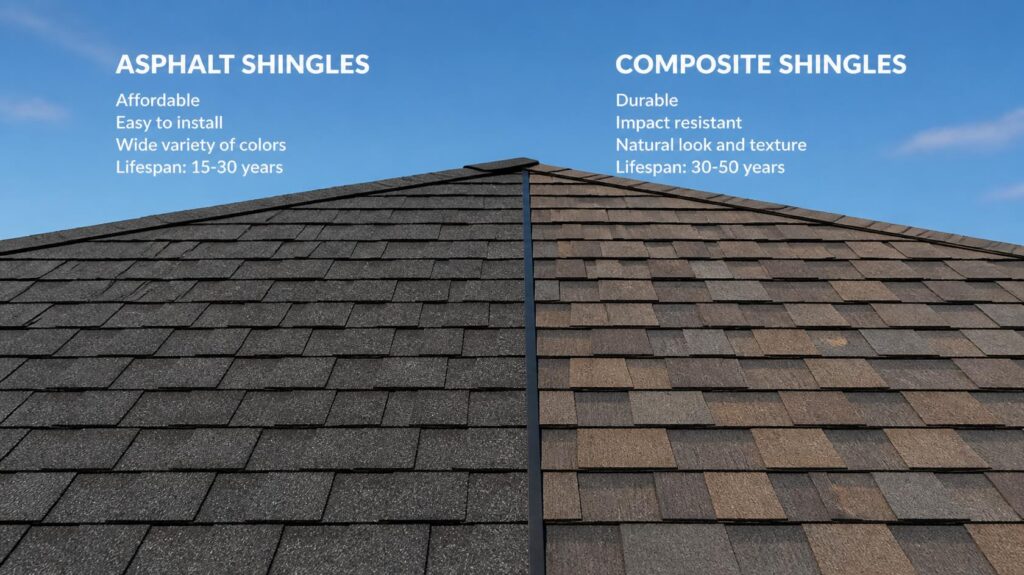
Asphalt shingles are made from a fiberglass mat coated in asphalt and topped with mineral granules. They’ve been the standard roofing material in the U.S. for decades because they’re affordable, easy to install, and available in dozens of colors and styles — from basic three-tab to dimensional/architectural profiles.
Composite shingles are engineered from a blend of materials — polymers, recycled rubber, fiberglass, and sometimes wood fiber — molded to mimic the look of natural slate or cedar shake. They cost more upfront but are built to outperform asphalt on durability, weather resistance, and lifespan.
Real Cost Numbers for Los Angeles Homeowners
Most guides on this topic stop at “asphalt is cheaper.” Here’s what that actually looks like installed in the LA market:
| Material | Installed Cost per Sq. Ft. | Typical Cost, 2,000 Sq. Ft. Roof |
| Architectural asphalt shingles | ~$4.50–$6.50 | ~$9,000–$13,000 |
| Synthetic composite shingles | ~$7.50–$11.00 | ~$15,000–$22,000 |
LA labor and permitting costs run higher than national averages, which is why these figures sit above generic nationwide guides. Get an exact number for your roof with a free estimate — we’ll walk you through pricing based on your roof’s actual size, pitch, and access.
Lifespan, Durability, and Warranty
Composite shingles pull ahead here on paper. They resist cracking, warping, and color fading better than standard asphalt, largely because of their synthetic composition, and they hold up better against LA’s specific weather stressors — intense summer UV exposure, occasional heavy winter rain, and Santa Ana wind events that can lift or crack older asphalt shingles.
That said, not all asphalt is equal. Architectural (dimensional) asphalt shingles — like the Owens Corning and Malarkey lines we install as a preferred contractor — perform significantly better than basic three-tab asphalt, with wind ratings up to 130 mph and algae resistance built for California’s climate.
| Factor | Asphalt Shingles | Composite Shingles |
| Typical lifespan | 20–25 years (architectural) | 30–50 years |
| Manufacturer warranty | 20–30 years | 30–50 years, often with enhanced wind/impact coverage |
| Replacements over 30 years | Often 1–2 | Frequently a single install |
Energy Efficiency and Your LA Utility Bill
This is where local climate matters more than most national guides let on. Dark asphalt shingles absorb heat and can raise attic temperatures, pushing up summer cooling costs — a real factor given how many LA summer days hit the 90s. Composite shingles, along with cool-roof-rated architectural asphalt options, reflect more solar heat and can help meet California Title 24 energy code requirements on reroofs. If lowering your cooling bill is a priority, ask your contractor about Title 24-compliant, cool-roof-rated products in either category — it’s not exclusive to composite.
Fire Rating: A Critical Factor for LA Homeowners
Given how much of Los Angeles sits in or near wildfire-risk zones, fire rating deserves its own section. The good news: both quality asphalt and composite shingles typically carry a Class A fire rating — the highest available — when installed as part of a complete roofing system. Composite shingles often edge out asphalt on impact resistance too, carrying a Class 4 impact rating in many cases, which matters if you’re in an area prone to hail or falling debris.
If you’re in a hillside or higher fire-risk neighborhood, it’s worth discussing your specific address with a licensed contractor rather than relying on general specs — local fire codes and insurance requirements can vary block by block.
Aesthetics and Curb Appeal
Asphalt shingles offer strong versatility across architectural styles, from Mediterranean to modern minimalist, with the widest range of stock colors. Composite shingles are the better choice if you want the look of natural slate or cedar shake — popular in upscale neighborhoods like Encino and Hancock Park — without the weight or cost of the real material. If you’re weighing a third option, our tile roofing page covers clay and concrete tile for homes going for a full Mediterranean look.
Maintenance
Both materials are relatively low-maintenance, but asphalt shingles are more prone to granule loss over time, which accelerates deterioration and isn’t always covered by warranty. Composite shingles resist mold, mildew, and algae growth more effectively, which can mean fewer inspection-driven repairs over the life of the roof. Either way, annual inspections — especially after major wind or rain events — go a long way. Our guide on protecting your roof from hail damage covers warning signs to watch for regardless of shingle type.
Which Should You Choose?
- Choose asphalt shingles if: you want the lowest upfront cost, you’re roofing a rental or investment property, or you’re planning to sell within the next 10–15 years.
- Choose composite shingles if: you’re staying long-term, want the look of slate or cedar without the weight, live in a higher fire-risk area, or want to minimize the odds of a second reroof down the road.
Frequently Asked Questions
Do composite shingles really last longer than asphalt? Yes — composite shingles typically last 30–50 years versus 20–25 years for architectural asphalt.
What’s the actual price difference between asphalt and composite shingles in Los Angeles? Architectural asphalt typically runs $4.50–$6.50 per sq. ft. installed in the LA market, while synthetic composite runs $7.50–$11.00 per sq. ft.
Are composite shingles the same as composition shingles? No. “Composition shingle” is another name for traditional asphalt shingles. “Composite shingle” today usually refers to newer synthetic/polymer products.
Do composite shingles lower cooling costs in LA? They can, along with cool-roof-rated architectural asphalt — both categories now offer Title 24-compliant options.
Do asphalt and composite shingles have the same fire rating? Both typically achieve a Class A fire rating as part of a complete roofing system, though specifics depend on the exact product and installation.
Can I install composite shingles over an existing asphalt roof? It depends on your roof’s current condition and local code requirements — this is best assessed during an in-person inspection.
Get an Expert Opinion for Your Roof
Every home’s ideal shingle choice depends on your roof’s age, slope, and location-specific risks. If you’re ready to compare options for your property, contact The Best West Roofing for a free, no-obligation estimate. As an Owens Corning and Malarkey preferred contractor serving Encino and the greater Los Angeles area, we’ll help you weigh cost, durability, and fire safety before you commit.