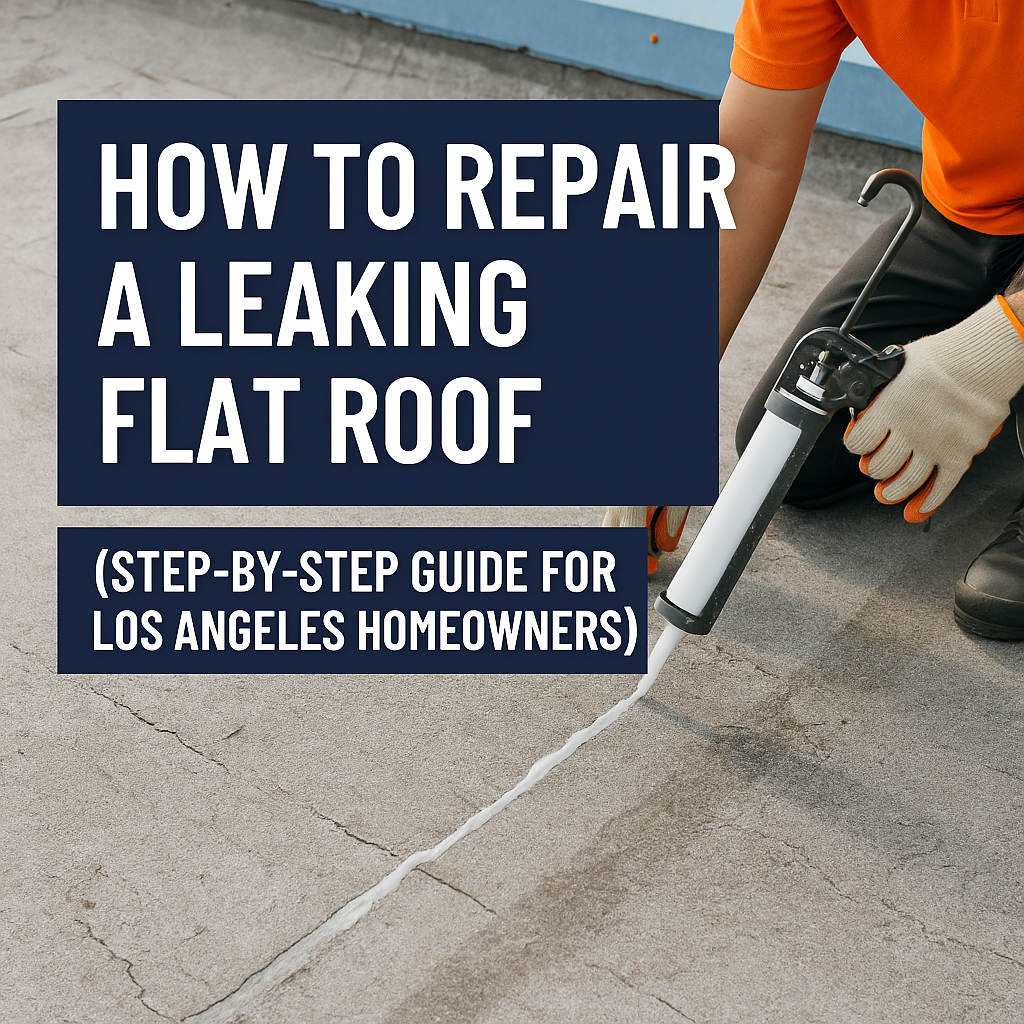
Flat roofs are common in Los Angeles, but when they leak they can cause stains, mold, insulation damage, and expensive repairs. This guide shows you a safe, practical step-by-step method to find and stop many common flat-roof leaks — plus when you should call the pros at The Best West Roofing.
If you’d rather skip DIY or suspect structural damage, call us now at 323-304-3580 or use our contact form: https://thebestwestroofing.com/contact-us/.
Quick overview: Should you DIY or call a pro?
-
Small cracks, pinholes, or punctures → often repairable with a proper patch and sealant (temporary to mid-term).
-
Widespread membrane failure, recurring leaks, or roofs older than ~10 years → call a licensed roofer (we recommend: https://thebestwestroofing.com/flat-roof-leak-repair/).
-
Commercial property, heavy ponding, or structural sagging → professional assessment and repair required.
Why flat roofs leak in Los Angeles
Los Angeles climate and roof construction cause typical failure points:
-
Ponding water / poor drainage — standing water accelerates membrane breakdown.
-
UV & heat damage — sun exposure causes membranes to crack, shrink, or blister.
-
Flashing and seam failure — seals at edges, vents, and drains degrade.
-
Foot traffic / mechanical damage — rooftop equipment or walking can puncture membranes.
-
Improper installation or aging materials — poor workmanship or time reduces performance.
Tools & materials you’ll need
(Only attempt repairs if you’re comfortable working on roofs and it’s safe to do so.)
Tools
-
Stiff broom / blower
-
Utility knife / scissors
-
Putty knife or trowel
-
Roller (for adhesive / coatings)
-
Caulking gun
-
Water hose (for test)
-
Ladder with stabilizer
-
Safety harness if roof is high/steep
Materials
-
Roofing cement / compatible seam sealer (TPO/EPDM compatible if required)
-
Patch material (TPO patch for TPO roofs, EPDM patch for EPDM, or reinforced roofing fabric)
-
Primer (if recommended by membrane manufacturer)
-
Flashing materials (aluminum / metal flashing or membrane flashing tape)
-
Waterproof coating (if you plan to coat the patch area)
-
Gloves, safety glasses, knee pads
Safety note: Don’t work on a wet roof, during wind, or alone on high roofs. If your roof is steep, older, or heavily damaged, call experts: https://thebestwestroofing.com/services/
Step-by-step: How to repair a leaking flat roof
1. Locate the leak (inside → outside link)
-
Inside: trace water stains back to the highest point of staining — water can travel, so the leak may be uproof.
-
Outside: examine the roof surface for ponding, blistering, cracks, punctures, open seams, and failed flashing near drains/vents.
2. Clear and dry the area
-
Remove leaves, debris, and standing water.
-
Use a blower / broom and let the surface dry. Moisture under a patch will trap water and cause failure.
3. Prepare the surface
-
Cut away loose membrane edges and clean the substrate.
-
If required, apply primer per manufacturer instructions.
4. Small cracks & pinholes (quick fix)
-
Clean and dry thoroughly.
-
Apply roofing cement or specialized sealant over the crack; smooth with a putty knife.
-
For added strength, press a small patch of roofing fabric into the wet cement and topcoat.
5. Larger punctures or seam failures (robust fix)
-
Cut a patch that extends at least 3–6 inches beyond the damaged area on all sides.
-
Round the patch corners to prevent peeling.
-
Apply adhesive/primer, press patch firmly, roll to remove bubbles, and seal edges with seam sealer.
6. Flashing repairs
-
If flashing is loose or open around vents/curbs, reseal with compatible flashing tape + sealant, or replace metal flashing where corroded.
7. Test the repair
-
After curing time per product instructions, gently run water over the repaired area or wait for the next rainfall.
-
Inspect interior ceilings for signs of continuing leaks.
8. Document & monitor
-
Take photos before/after and check the repair every month for 3 months, especially after heavy rain or heat changes.
Temporary vs. long-term solutions
-
Temporary: Sealants and small patches — good short term (months) or until professional repair.
-
Long-term: Proper membrane splice repairs, relaying sections, or full membrane replacement. If leaks recur, a professional evaluation is more cost effective than repeated patches.
Preventive maintenance (recommended schedule)
-
Bi-annual inspections (spring & fall).
-
After storms: clear debris, check drains.
-
Annual cleaning of drains & scuppers.
-
Apply reflective/protective coatings every 5–7 years (reduces UV damage and heat stress).
-
Set up a maintenance plan with a roofer — check https://thebestwestroofing.com/services/ for maintenance options.
When to call The Best West Roofing
Call us if you notice: recurring leaks, visible sagging, multiple leak points, or if you prefer a permanent, warranty-backed repair. We offer fast inspections and professional solutions:
-
Book a free inspection here: https://thebestwestroofing.com/contact-us/
-
Learn about our flat roof services: https://thebestwestroofing.com/flat-roof-leak-repair/
-
See all services: https://thebestwestroofing.com//services/
Or call: 323-304-3580.
FAQs
Q1: Can I repair a flat roof myself?
A: Yes — for small punctures or cracks, a DIY patch using compatible membrane patching materials and sealant can work. For recurring leaks, large damage, or roofs older than 10 years, contact a licensed roofer.
Q2: How long will a DIY flat roof repair last?
A: A DIY patch can last a few months to a couple of years depending on material, workmanship, and weather. Professional repairs or membrane replacements are longer-lasting and often carry warranties.
Q3: What materials work best for flat roof repairs?
A: Use membrane-compatible materials: TPO patch/adhesive for TPO roofs, EPDM patch for EPDM, and approved roofing cement or seam sealer for built-up or modified bitumen roofs. Always follow manufacturer recommendations.
Q4: Will a patch stop leaks permanently?
A: Patches can be permanent if the surrounding membrane and substrate are sound. If underlying damage or widespread degradation exists, a patch may be temporary.
Q5: How quickly can you inspect and repair a flat roof?
A: The Best West Roofing offers fast inspections. For urgent leaks, call 323-304-3580 or submit a request at https://thebestwestroofing.com//contact-us/.
Q6: Do you offer maintenance plans or financing?
A: Yes — maintenance plans and financing options are available. Contact us at 323-304-3580 or see our services page: https://thebestwestroofing.com//services/.