Introduction
Solar panel roofing is becoming a more practical option for homeowners and commercial property owners in a city like Los Angeles, which has sun for most of the year. With increasing costs of electricity, environmental concerns and long term energy planning many people have been exploring ways to reduce their dependence on traditional power sources.
But solar panel roofing isn’t just about sticking panels on top of a building and expecting instant savings. The performance of a solar roofing system is affected by several factors such as the condition of the roof, energy consumption, local regulations, and the quality of installation.
For property owners in Los Angeles, the first step before jumping into any long-term investment is usually understanding the mechanics of solar panel roofing, and whether it is a good fit for a particular property.
What Is Solar Panel Roofing?
Solar panel roofing or solar roofing is a roofing system that uses photovoltaic (PV) solar panels installed on the roof to convert sunlight into electricity. They are typically used on residential homes, apartment buildings, warehouses, office space and retail properties.
Solar roofing is not the same as traditional electricity that is generated from the power grid. Solar roofing generates energy from the sun. The electricity created can be used to power appliances, lighting, cooling systems and other electrical needs inside the property.
Most solar roofing systems in Los Angeles are still connected to the utility grid. This allows you to feed excess electricity produced in the sunny hours back into the grid while still being able to draw electricity during less sunny times like during night time.
Why Solar Roofing is a Good Idea in LA
When it comes to solar energy, Los Angeles has one thing going for it: sunlight. The city has plenty of sunshine throughout the year, making solar panel roofing more practical than in places with existing cloud cover.
Another aspect of solar roofing that receives attention in Los Angeles is the price of electricity. California’s utility costs are also often much more expensive than many other states and property owners are looking for long-term solutions.
Commercial property owners can also use solar roofing to meet sustainability goals and improve energy efficiency.
“Many businesses are becoming more aware of operational costs and environmental impact, so solar installations are becoming a practical consideration instead of just an environmental statement.”
On the residential side, homeowners often view solar roofing as a long-term upgrade that can help recoup rising electricity costs over time.
Types of Solar Roof Systems
Not all solar roofing systems are created equal. Typically, property owners have two primary choices.
Conventional Solar Panels
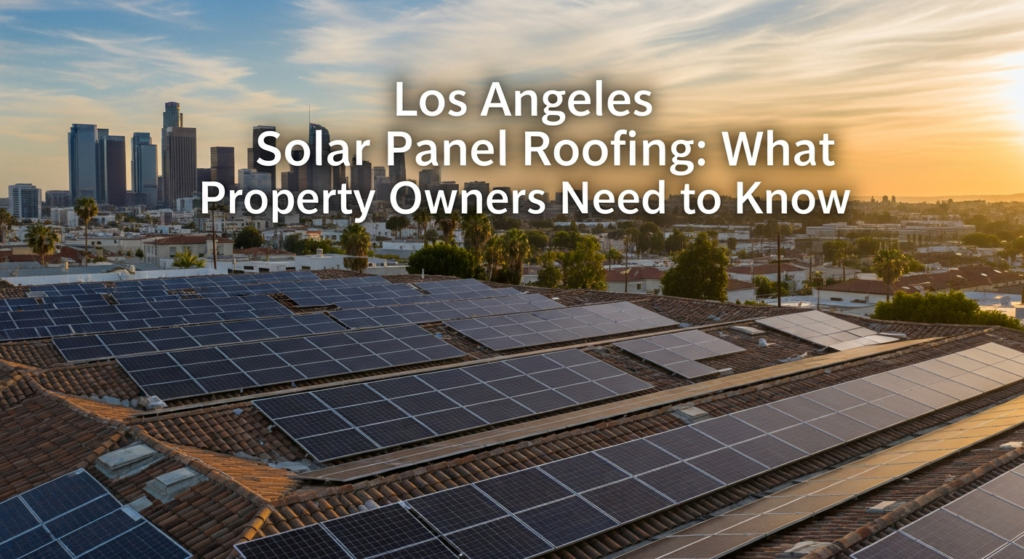
These are the most common systems found across LA rooftops. The panels are placed on top of the existing roofing materials, and positioned to maximize sun exposure.
Older systems tend to be more available, easier to maintain and cheaper than newer systems.
Solar Roof Shingles or Tiles
Solar shingles are designed to blend more naturally into the roof. Instead of visible mounted panels, the roofing material itself generates electricity.
Solar shingles look nice but they tend to be more expensive and aren’t always the best option for older homes or commercial buildings.
Important Points Before Installation
Before you invest in solar panel roofing there are some practical things worth thinking about.
Condition of Roof
Before you install panels, an inadequate roof may need repair or replacement. Solar systems usually stay put for decades, so putting them on an aging roof can create unnecessary complications down the road.
Direction of Shade and Roof
Roofs that receive strong sunlight most of the day tend to do better. Shade from nearby trees, adjacent buildings or architectural obstructions can reduce energy production.
Energy Use
Solar roofing is most effective when designed based on the actual electricity consumption of the property. Undersized or oversized systems can damage efficiency and financial value.
Local Permits & Regulations
In Los Angeles, solar projects need permits, inspections, and utility approvals. Working with experienced contractors who are familiar with California regulations can help.
Advantages of Solar Panel Roofing
Solar roofing has practical advantages, but keep expectations realistic.
Reduced Dependence on Traditional Power
On-site power generation can help to reduce reliance on utility providers, particularly at times of peak energy demand.
Energy Planning Long-Term
While the initial cost of installing solar roofing is expensive, many property owners see it as a long-term investment.
Environmental Advantages
Solar power produces electricity with no direct emissions associated with its operation. This is still one of the appealing aspects of solar adoption for those interested in reducing environmental impact.
Of Property Appeal
In some cases, energy efficiency upgrades may make a property more marketable, especially in environmentally conscious areas of California.
Property Owners: What You Need to Know
Solar roofing isn’t for every property.
One common misconception is the expectation of instant savings. But these benefits are not realized immediately, and the costs of installation can be substantial.
Maintenance needs are generally manageable but not completely absent. Sometimes panels need cleaning, inspection or inverter maintenance.
Weather conditions are also important. Los Angeles has great sunshine all year, but seasons change and there are some cloudy days that can affect the solar output.
Roof design is also important. Small roofs or buildings with a lot of shade may not produce enough electricity to offset the cost of the installation.
Is Solar Roofing Worth It In LA?
A lot of the answer will depend on the property itself.
For homeowners who have enough space on their roof, use a lot of electricity and plan to stay in their home for the long haul, solar panel roofing can have practical value over time.
Commercial property owners often look at solar roofing a little differently. Large businesses with large rooftops and high daytime electricity demand may benefit more in the long run.
But solar roofing isn’t one size fits all. Without a proper site assessment and realistic understanding of energy needs no decision can be made.
Frequently Asked Questions
1. What’s the lifespan of solar roofing systems?
Solar panel systems will last for 20-30 years in most cases, but their performance will slowly deteriorate over the years.
2. Can solar roofing work on cloudy days?
Yes, but generally efficiency is lower in bright sunny conditions.
3. Do solar panels harm your roof?
When installed by professionals, solar panels generally don’t damage roofing structures.
4. Are solar panels good for commercial buildings?
Yes. Commercial buildings with larger roofs generally have good solar potential.
5. Are solar panels in need of regular maintenance?
Maintenance is usually low, though periodic inspection and cleaning may be necessary.
6. Do we need battery storage?
Not always. Many of the properties in Los Angeles are still hooked up to the grid.
7. Can solar panels be mounted on old roofs?
that depends on the structural condition. Roof inspections are advised before installation.
8. Solar Shingles vs. Solar Panels: Which Is Better?
Not at all. Shingles may give a more seamless appearance, but traditional panels are usually more affordable.